



For the past 22 years, Junior Achievement Southern Alberta has honoured business leaders from across every sector by inducting them into the Southern Alberta Business Hall of Fame. Chosen for their life achievements and service to the economy, community and future, these leaders not only helped shape this province, they serve as an example to us all.
On October 8, at the BMO Centre at Stampede Park, four more laureates will be inducted at the 2026 Southern Alberta Business Hall of Fame Gala and Induction ceremony. JA Southern Alberta’s largest annual fundraising event, with proceeds supporting JA Southern Alberta’s free programs for young people, the evening brings together leaders from across the business and nonprofit communities and supports the next generation of entrepreneurs and community leaders.
“That connection is what makes the event so important to us,” says Jessica Cohen, president and CEO of JA Southern Alberta.
This year’s laureates come from different industries and backgrounds, but all have made a lasting contribution to southern Alberta through their leadership, entrepreneurship and community involvement.
“Avi Amir is the founder and chairman of Homes by Avi,” Cohen says. “Over more than four decades, he has grown the company while helping build communities across Alberta and beyond. He is known for his entrepreneurial vision, his commitment to quality and his longstanding support of the communities where he does business.”
“Martha Billes is a Canadian business leader and philanthropist who played an important role in shaping the future of Canadian Tire,” Cohen continues. “She is also the founder of Canadian Tire Jumpstart Charities, which helps remove financial and accessibility barriers so that young people can participate in sport and recreation.”
“Jim Davidson is the co-founder of FirstEnergy Capital Corp., which became one of Canada’s most influential energy investment firms,” she says. “He has made an enormous contribution to Calgary’s business community, as well as to many organizations and causes through his leadership, mentorship and philanthropy.”
“Stan Owerko is the founder of Petrogas Energy Corp., which he grew into a leading North American energy company,” Cohen notes. “He has also supported many important initiatives in health care, education and housing.”
JA Southern Alberta has existed since 1960 and helps young people develop practical skills in financial literacy, entrepreneurship and work readiness. Last year, the organization reached just over 40,000 students, from elementary through high school, across Calgary, Lethbridge, Medicine Hat, Red Deer, Brooks and surrounding rural and Indigenous communities.
“Our programs are delivered through volunteer-led classroom programs, teacher-led resources, digital learning and large student events,” Cohen explains. Approximately 250 volunteers support JA each year.
Its flagship entrepreneurship initiative is Company Program, which allows students to create and operate a real business. They develop a product, take on leadership roles, open a business bank account, manage their finances, market their business and learn how to work through challenges as a team. Last year, 410 students participated in Company Program.
JA Southern Alberta also offers events such as World of Choices and Be Entrepreneurial, which introduce students to different careers, industries, post-secondary pathways and business opportunities.
“The Southern Alberta Business Hall of Fame is ultimately about legacy,” Cohen concludes. “Each year, a number of high school student will attend the gala. They need to hear that successful careers are rarely perfectly planned or linear but built through perseverance, relationships, thoughtful risk-taking, learning from setbacks and being willing to act when opportunities arise. By celebrating this year’s laureates, we hope to preserve their stories and use them to encourage young people across southern Alberta to think about what they might build, how they might lead and what they can contribute to their communities.”
Issue: October BiC Cover
Stan Owerko
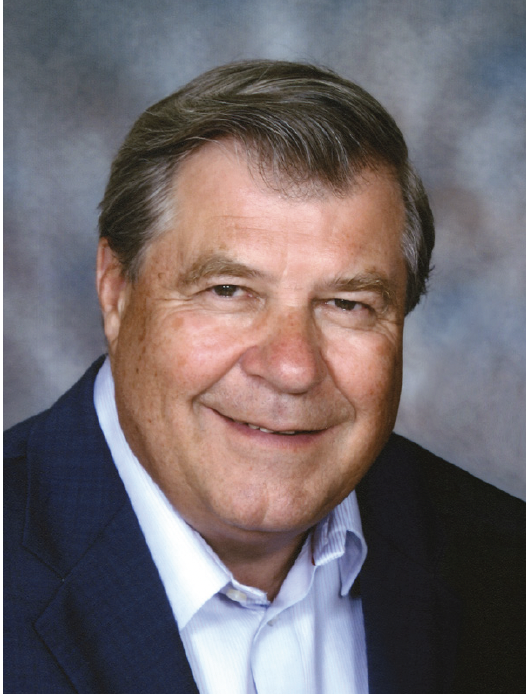
The many successes in Stan Owerko’s life can largely be attributed to one crucial factor: the unwavering support of his wife Marge. Owerko first met her in 1966 in Edmonton; she was a nursing student at the Edmonton General Hospital, and he, a native of Ituna, Saskatchewan, was a student at the University of Alberta. They married a year later and welcomed their first son Lyle, a year after that.
After graduating from the Faculty of Education, Owerko began what he thought would be a long career as a school teacher. But fate intervened.
“A friend from a five-man geological field work crew in Northern Canada (a dream summer job for a young man who loved the outdoors) recommended I contact an oil and gas company in Calgary that was interested in hiring me,” he recalls.
The company was Great Plains Development Company. Owerko flew to Calgary for the interview and got a job paying $50 more per month than he could get teaching. The young family moved to Calgary in the summer of 1968.
A few years later, Owerko took a new job in mineral exploration but then the company went bankrupt. “We found ourselves in a tough spot: two kids, no house, no car, no jobs and $1,200 in the bank!” he reflects. “Faith and resilience got us through the next six months until I landed an oilfield job with Amoco Canada in Drayton Valley. We once again packed up and moved the family.”
Marge got a nursing job in Drayton Valley and then in Whitecourt after the family was transferred there. In 1975, the family moved back to Calgary after Owerko took an administrative manager’s job in Amoco’s supply and marketing department.
In 1980, the federal government enacted the National Energy Program. “After reviewing the legislation, I discovered it focused entirely on crude oil and not condensate,” Owerko explains. “I relayed this information to my superiors which saved Amoco – and the industry – somewhere between $450 and $500 million!”
By 1986 Owerko was ready to start his own oil and gas marketing company. Using the family home as collateral and giving a personal guarantee, he obtained a $400,000 line of credit.
Owerko would go on to lead Petrogas Energy Corporation for 35 years to become a large independent asset-based marketing and logistics company. From humble beginnings, it built a large suite of terminalling and logistics assets which included the only propane and butane export terminal on the west coast of North America.
Petrogas was sold in 2020.
The Owerkos have anchored their philanthropic endeavours on four pillars: family, friends, church and community.
“Today in Ukraine, we have about 350 family members,” Owerko says. “Marge has been a pillar of strength for more than 40 years: buying, sorting and making hundreds of moving boxes of children’s and adult clothing, household items, school supplies, you name it – to support my family during the Soviet times and now this devastating war in Ukraine.”
The Owerkos created a program to cover the cost for all students who want to pursue an education beyond high school, as well as learning to speak English: “Over the last 25 years, we have graduated 44 university students, and there are currently 15 students enrolled in post-secondary school studies.”
Their church community has been an anchor and refuge for the Owerkos, and in addition to supporting their faith community in Canada and supporting art restoration projects at the Vatican museums, they have been the catalyst in building a church and seminary in Ukraine, opened in 2017.
“Currently there are 64 young men from war-torn eastern Ukraine studying to become priests to support the catholic faithful there,” Owerko says proudly.
More locally, the Owerkos have supported the Alberta Children’s Hospital, the Owerko Research Centre for children’s brain health research, The Summit (a child and adolescent brain health walk-in centre), the Arthur Child Cancer Centre, and has partnered with the province to purchase two state-of-the-art MRI machines.
They have also supported St. Mary’s University, the Bishop’s Manor, were initial founders of the Shaw Charity Classic, the United Way and many other charities.
Martha Billes
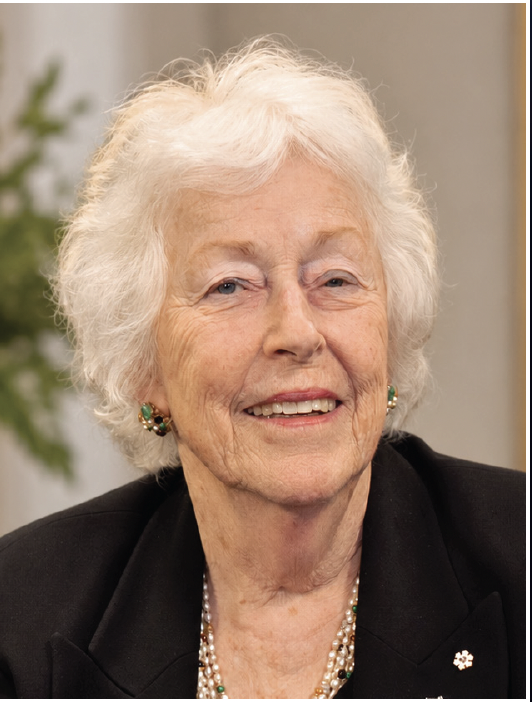
When Martha Billes joined the Canadian Tire Corporation Board in 1980, women were all but absent from corporate leadership in Canada. The only daughter of A.J. Billes – who, with his brother, opened the first Canadian Tire store in Toronto in 1922 – Billes stepped into an arena where she had to be bold, prepared and confident about why she was there.
By that time, Canadian Tire was a retail chain with some 300 stores.
“I was very much my father’s daughter,” Billes recalls. “Persistent, curious and relentlessly determined when I set my mind to something. Canadian Tire has been very present in my life; I do not believe my path was preordained. Each of us [Billes had two brothers] had to make our own way, and that meant learning, working and eventually proving that we each had something to contribute in our own right.”
A graduate of the University of Toronto’s Macdonald Institute in 1963, Billes received an Honours Bachelor of Science with an added focus on early childhood education. After graduating, she worked in consumer product research and development with Lever Brothers and the Ontario Research Foundation.
She earned her teaching certificate from Ontario Teachers’ College in 1968, and taught grade seven and eight English in Ottawa, and full grade six curriculum in Toronto.
“Teaching reinforced something I still believe,” she says. “That fostering growth in people and communities is fundamental to building a stronger society. Whether in a classroom or a company, there is tremendous long-term value in creating conditions where people can gain confidence, thrive and grow.”
Though joining the Board was not easy, Billes relied on her science background to give her a direction that was totally different than anyone else’s on the Board: “I believed in the company, and I believed I could help lead with the vision, discipline and determination that was needed to continue making things better.”
Billes prioritized keeping Canadian Tire Canadian. “Canadian Tire has always been about people and community,” she explains. “Today, Canadian Tire is woven into the fabric of communities across the country, not only as a retailer but, through our dealer network, as a trusted neighbour, employer and community partner.”
She became controlling shareholder in 1997 and under her leadership Canadian Tire has flourished. Today, it is an operating company with divisions, brands, and more than 1,600 retail and petroleum locations. It has expanded through acquisitions and business developments such as Mark’s, SportChek, Canadian Tire Bank, CT REIT and Triangle Rewards.
In 2005, Billes co-founded Canadian Tire Jumpstart Charities. “We wanted to support the communities we serve in a meaningful way and help build a stronger future for Canadian families,” she explains. “At the heart of this vision was a deep respect for the families and communities who play such an important role in shaping a child’s future.”
After a decade of work removing financial barriers to sport and play, it became clear to Billes that cost was only one obstacle preventing participation. She convened some of Canada’s foremost leaders in women’s sport to better understand how to keep girls and young women active and engaged.
“The insights from that discussion gave rise to Jumpstart’s Girls in Sport initiative, which has since directed half of Jumpstart’s community investment toward girls and young women,” Billes says. “That work inspired Canadian Tire’s Women’s Sport Initiative, which has committed at least 50 per cent of the company’s sport sponsorship dollars to Canadian women’s sport by the end of this year.”
Today, Canadian Tire is a partner of the Toronto Tempo and a founding partner of both the Professional Women’s Hockey League and the Northern Super League.
In 2017, Billes championed the creating of Jumpstart’s Inclusive Play Program, to ensure children of all abilities can participate.
Since 2005, Jumpstart has helped more than 4.5 million children and youth access sport and play.
Billes’ advice to the younger generation: “Be curious, be prepared and do not shrink away from difficult work. Success is not born of waiting for permission. It is born of knowing what you believe, a commitment to learning and having the discipline to keep going – especially when the path is not easy.”
Avi Amir

Avi Amir never set out to build one of the largest and most successful home building companies in Calgary, yet that is exactly what he did. Homes by Avi (originally Avi Construction) was formed in 1978 when Amir, a civil engineer by trade, found himself without other options. With a bit of experience and little money to his name, he started with one fourplex project.
Forty-eight years later, Homes by Avi builds roughly 1,000 homes per year. With just under 300 employees, it is now a second-generation company with Amir’s son Charron Ungar leading.
Amir has come a long way. He was born in Slovakia in 1942 – during the height of World War II – to Jewish parents. “Luckily, my parents, my sister and I survived it,” he recounts. “In 1949, we moved to Israel which was just established a few months earlier. I grew up there.”
He graduated from Technion in Haifa as a civil engineer in 1967. He worked for the Port Authority and then joined a general contractor as a project manager. “I worked as a project manager mostly in Haifa and then in the northern part of Israel in different places like Nazareth and Tzfat,” he says. “In 1973, after the war, I decided to move my family to Canada.”
The family arrived in November 1974. “I started a new life here again as an engineer,” Amir says. “I got a job with Anthes Equipment, a shoring and scaffolding supply company. I was the regional engineer for the west to help design the systems. They treated me very well.”
Two years later, his old boss from Israel visited and suggested they start a company. “We established a company called Drucker Construction,” he reminisces. “I owned 25 per cent. He put up the money and I did the work.”
That work consisted of a lot of industrial jobs – warehouses in the foothills industrial area and manholes for AGT (now TELUS). The largest project was an RCMP detachment in the Northwest Territories.
But in 1978, Amir’s partner pulled back his money and dissolved the company, leaving Amir with little choice but to start his own business. “I was unable to get bonding, so I couldn’t do public work anymore,” he says. “So I purchased an old house, demolished it and built a fourplex. I figured that eventually I would go and work with a land developer.”
After putting a second mortgage of $30,000 on his own home, he approached Nuwest (a developer at the time) to purchase a single lot and build a house. “They told me I could be a showhome builder in Woodbine to get a lot,” he says. “I said: ‘I don’t have the money to be a showhome builder.’ And they said, ‘It’s showhomes or nothing.’ So I had no choice but to build showhomes in Woodbine.”
And then the crash of the early 1980s came. “Unfortunately quite a few large builders disappeared from the market at that time, which created room for small builders like me.”
Over the years it has been a commitment to building a quality home that has helped the company grow. One major milestone was being selected to build Garrison Woods in 1998. “It turned out to be a very, very good subdivision which has won awards throughout North America,” he reflects. “I’m really proud of being part of that.” It was also in 1998 that Homes by Avi started building in Edmonton.
The local charitable causes Amir and his company typically support are in the areas of education, public health and homelessness. For example, the company works with local high school Jack James to teach students trades in the housing industry.
It was also one of 12 builders participating in the RESOLVE Campaign to end homelessness, in which Homes By Avi built a four-story building for homeless women in Bridgeland.
“I’ve been talking with students for 30 years,” he says. “I tell them first of all, choose what you like to do. Don’t choose it because it makes a lot of money. Second, be honest, persistent and do a good job in whatever you do.”
Jim Davidson

Looking back on his career, Jim Davidson credits a willingness to try something new as a key to his success. This ability to pivot first helped a young Davidson at the University of Waterloo, where he was a student in no less than five faculties (Environmental Sciences, Kinesiology, Urban Planning, Economics and Geography). While he eventually graduated with an environmental sciences degree with a minor in economics, he learned a lifelong skill.
“Being open to pivoting helped me throughout my career,” Davidson reflects. “Doing things I found interesting gave me a well-rounded view of the world and what my ultimate career could be.”
Balancing study time and arranging his schedule to accommodate different faculties fostered discipline and organizational skills, while convincing different department heads to let him take courses out of order fostered sales skills. “Which is interesting because ultimately sales was a big part of my career,” he reflects.
“I wanted to be a teacher,” he continues, “so I went to university thinking I would take education. But I was open to experimenting. I ended up choosing a career that had nothing to do with my university studies but everything to do with my willingness to be open to trying something new.”
Born and raised in Toronto, the youngest of five children, Davidson’s youth was spent mostly playing sports – rugby, football, hockey, baseball – and working. He started a paper route at age 10 and worked from that time forward. His father passed away when he was 18 years old, so he had to work through university to pay for it.
While driving to Vancouver one summer during university to visit his sister, he stopped in Calgary and applied for and got a job as a section director with the YMCA’s Camp Chief Hector. “I fell in love with the mountains and the people,” he reminisces.
From that point on, he was drawn to Calgary. He returned the following summer and worked construction and in the restaurant business. He was accepted into a few business schools but was approached by Matt Aufricht to be a stockbroker. “I told him I had no interest in becoming a stockbroker,” Davidson recounts. “But he said he thought I might be good at it. So I said, ‘What the hell, I’ll give it a try.’”
That was in 1981. The recession of the early 1980s hit shortly thereafter. “I grounded it out, barely surviving,” he says. “I learned the discipline of hard work, prospecting and consistency, and used all the skills that I had utilized to get myself through an overwhelmingly large university curriculum. I worked until I became successful.”
Davidson built a fairly large book and established himself as a successful stockbroker in Calgary. He ended up at First Marathon Securities. By 1992, he became a founding partner of FirstEnergy.
“We took our time to put First Energy together,” he says. “We became the dominant boutique brokerage firm in Canada.”
At its height, FirstEnergy was the fourth largest trader of energy securities in Canada, the leading underwriter of oil and gas securities in Canada, and one of the top M&A dealers in Canada. It also had a research team ranked top in the energy space.
“But we’re most proud of our philanthropic work,” Davidson explains. “Early on we decided to give two and a half per cent of our pre-tax profits to charity each year. We were a firm with a heart – known for our parties that had a philanthropic aspect. I stopped counting at $34 million – that’s money that went back to the communities.”
First Energy was sold in 2016 and Davidson stayed on until 2018. Today he sits on several boards including ATB, Topaz Energy, the Fraser Institute, a fintech startup and a home building company.
He supports many charitable causes including Camp Chief Hector, the Humane Society and the Parks Foundation of Canada. He also helped to build the athletic facilities at the Edge School. He is happily married to Anne and has two lovely stepdaughters, Alex and Emma.