


The electronic systems that power modern life are easy to overlook, but circuit boards serve as the brains of everything from consumer devices to critical infrastructure.
It’s a business that feels more at home in the Silicon Valley, not a city best known for its oil and gas.
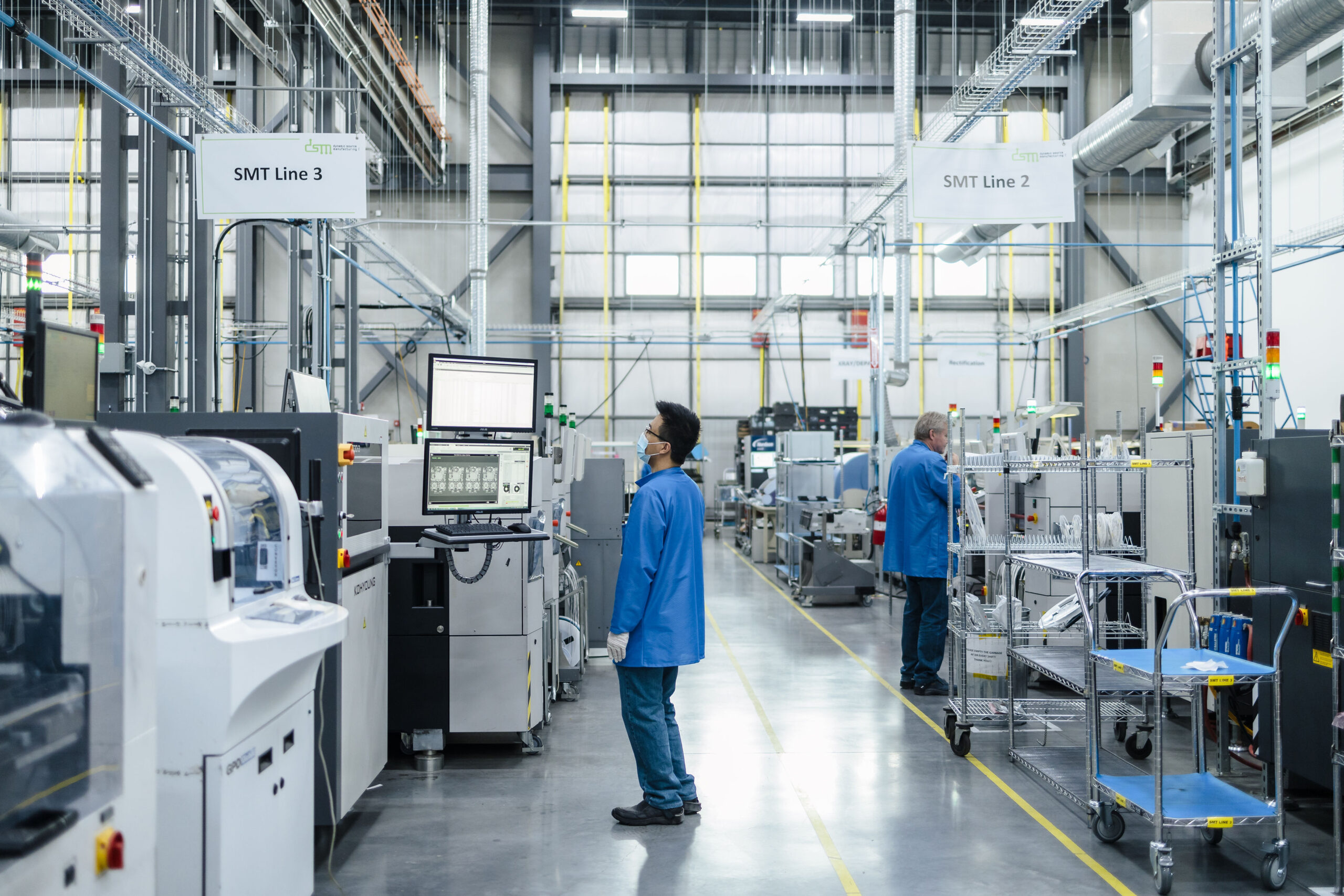
Yet for the past 25 years, Calgary-based Dynamic Source Manufacturing (DSM) has been assembling the electronic brains that power products across a range of industries – serving a reminder that the city’s manufacturing sector continues to diversify.
“There seems to be a growing level of success in Calgary’s tech sector, with more companies establishing themselves here and advancing technology and hardware development,” says Mark Maertens-Poole, chief financial officer at DSM, which recently received the 2026 Canadian Business Excellence Award for Private Businesses.
DSM operates as a niche player in the contract manufacturing space. The company focuses on producing what Maertens-Poole describes as high-value, complex products that are primarily sold in business-to-business markets.
The company has grown significantly from its humble beginnings. DSM currently operates out of a 55,000-square-foot facility in southeast Calgary with a headcount of approximately 150 employees. It operates four automated lines in Calgary and two at a facility in Arizona, with plans to expand in both locations.
DSM’s story is a familiar one. Over the past year, manufacturers across multiple sectors have announced they are expanding their footprint within the city.
Coke Canada Bottling, for example, opened a new 60,000-square-foot warehouse this past January – an investment the company says represents its largest single-facility development since 2018.
Flash Forest, meanwhile, announced in February that it would be relocating its primary manufacturing facilities and field-operations hub from Mississauga, Ont. to Calgary. The purpose-built western headquarters is designed to scale production of the company’s forestry intelligence hardware, automated drone mechanisms and biological tech across North America.
And this past spring, Hammond Manufacturing officially expanded its Western Canadian footprint by opening a new 55,000-square-foot regional distribution facility in Calgary. Located in the city’s southeast, the facility will serve as the primary supply chain artery for electrical enclosure and rack-mounting products moving across B.C., Alberta and Saskatchewan.
Brad Parry, president and chief executive officer of Calgary Economic Development, notes that a year after renewed trade uncertainty reshaped global markets, local manufacturers are decisively doubling down.
“Alberta companies are not shying away from growth in the face of uncertainty,” he says.
In its recent annual report, Calgary Economic Development singled out the growth of advanced industrial and aerospace manufacturing in the city. It points to support from talent attraction initiatives such as the agency’s expanded Talent Ready program as reasons behind that growth.
Parry also notes that local businesses are intentionally expanding into new global markets by taking advantage of Canada’s trade agreements, forming strategic partnerships and future-proofing their growth at levels “we haven’t seen before.”
“There is strong demand for Calgary-made and Alberta-made solutions in markets around the world,” says Parry. “We need to remain outward looking, maintain a global perspective and build new trade relationships so we can support local company expansion and create more opportunities here at home.”
Maertens-Poole credits several factors behind continued growth for DSM and the broader Calgary manufacturing sector. For one, he has noticed a gradual move by North American companies to reshore production due to ongoing geopolitical tensions and tariffs – the benefit also being able to gain better control over quality and timing.
Maertens-Poole also points to a significant increase in global and domestic defence spending, which has created substantial opportunities for manufacturers such as DSM.
For example, the Aerospace Innovation Hub opened its long-awaited headquarters at YYC Calgary International Airport earlier this year. The incubator – supported by both Prairies Economic Development Canada and Opportunity Calgary Investment Fund – intends to scale up to 180 aerospace, drone and defence tech manufacturing firms by 2028.
Julie Fortier, vice-president of policy and government relations for the Prairies at Canadian Manufacturers & Exporters (CME), agrees that defence spending represents a major growth opportunity for Calgary’s manufacturing sector.
“There is growing recognition that Canada will need stronger domestic manufacturing supply chains to deliver on its defence commitments,” she says. “This creates a lot of opportunity with defence spending that, in turn, provides more opportunities for manufacturing.”
CME supports Canadians manufacturers through training, advocacy and hands-on business support. Earlier this year, the association launched a CME Defence initiative to help manufacturers navigate Canada’s defence supply chain, particularly as demand and procurement opportunities in the sector continue to expand.
As part of that effort, CME has been gathering input directly from industry through a series of national roundtables to better understand where additional support is needed – including a session in Calgary this past month.
“We’re looking at where there are gaps and where we can offer additional support,” says Fortier.
In addition to defence, Fortier points to other high-growth subsectors such as food and beverage and machinery as driving forces behind local job creation.
While national numbers have dipped slightly, Fortier notes Calgary’s manufacturing sales have bucked that trend by jumping 5.8 per cent since the start of 2025. The city has also added 11,400 jobs since early 2025, compared with a 57,200 decrease nationally over the same period.
Meanwhile, the City of Calgary is gearing up for continued growth in manufacturing activity heading into 2027. Its 2026-2031 economic outlook cites population growth, business investment and industrial development as key factors that are supporting the sector’s long-term prospects.
To avoid bottlenecks during this growth phase, the City has advanced several initiatives through its Industrial Action Plan, including infrastructure investments in key hubs such as 68th Street S.E. and the Shepard Industrial area. It is also growing logistical capacity to support accelerating manufacturing activity.
Despite the opportunities emerging in Calgary’s manufacturing sector, Fortier says local companies should still expect to face some headwinds moving forward. She points specifically to shifting trade dynamics, regulatory complexity and broader economic pressures.
“It’s really challenging to grow when there isn’t certainty in the business environment,” she says. “It’s an uncertain time for manufacturers, with CUSMA negotiations looming and other ongoing barriers such as interprovincial trade restrictions, taxation challenges and red tape continuing to create friction for the sector.”
That said, Fortier believes there are still encouraging signs, pointing to many of the factors noted in the City’s outlook such as an increasing population, a robust GDP and an expanding industrial base.
“We’re cautiously optimistic right now,” says Fortier. “We just have to recognize that … uncertainty plays a major role in limiting manufacturing growth and investment, and there are still systemic barriers that need to be addressed.”
Looking ahead, Maertens-Poole believes Calgary is well situated for manufacturers such as DSM. He cites the city’s strong entrepreneurial culture and a favourable tax environment compared to other jurisdictions, among other examples.
He also notes that while the energy industry has faced challenges, the manufacturing and tech sectors have been able to leverage the highly skilled workforce that previously supported energy.
“While energy has traditionally driven much of the economy, it has also helped build a skilled workforce that manufacturing and technology companies have been able to leverage as the sector has matured,” says Maertens-Poole.