


As Canada’s population ages, the conversation around senior health is shifting. Living longer is no longer the only goal. Increasingly, the focus is on living well, maintaining independence, strength and social connection for as long as possible.
Across Calgary, a growing body of research and real-world experience in senior living communities points to the same conclusion: regular exercise, from walking to strength training, plays a critical role in healthy aging.
“Physical activity has diverse beneficial effects – biological, psychological and social,” says Dr. David Hogan, a specialist in geriatric medicine and professor-researcher at the University of Calgary’s Cumming School of Medicine. “There is no pill that can do as much in promoting healthy aging as exercise.”
The science behind staying active
Medical research increasingly identifies exercise as one of the most effective ways to improve both longevity and quality of life for older adults.
“Both living better and living longer,” Hogan explains when asked what current research shows about exercise and aging.
Regular physical activity reduces the risk of many chronic diseases common in later life, including cardiovascular disease, type 2 diabetes, osteoporosis, depression, dementia and certain cancers. It also strengthens muscles, including the heart, while improving immune function, brain health, sleep quality and energy levels.
According to a 2025 paper published in the Canadian Medical Association Journal, physical inactivity is a risk factor in the development of more than 30 chronic conditions affecting older adults.
“Being active is an important way to preserve, and in some cases improve, functional independence, brain and mental health, and quality of life,” Hogan notes.
Walking is often the most accessible starting point, but experts emphasize that a balanced approach works best. ParticipACTION guidelines for adults over 65 recommend at least 150 minutes of moderate aerobic activity each week, muscle-strengthening activities at least twice weekly and exercises that challenge balance.
“Brisk walking is fine as a moderate aerobic activity,” Hogan explains. Strengthening exercises such as resistance band training or body-weight movements help maintain muscle mass, while balance activities can reduce the risk of falls.
For Hogan, the advice to older adults and their families is straightforward.
“Get going but gradually,” he says. “Every little bit helps.”
Turning research into everyday movement
Senior living communities play an important role in translating those recommendations into daily routines.
At Riverwalk Retirement Residence in Calgary, Life Enrichment Manager Jose Paul explains that programs are designed to support residents with different levels of mobility while keeping activity engaging and accessible.
“Movement differs based on residents’ abilities; however, every program is designed to promote wellness and engagement,” says Paul.
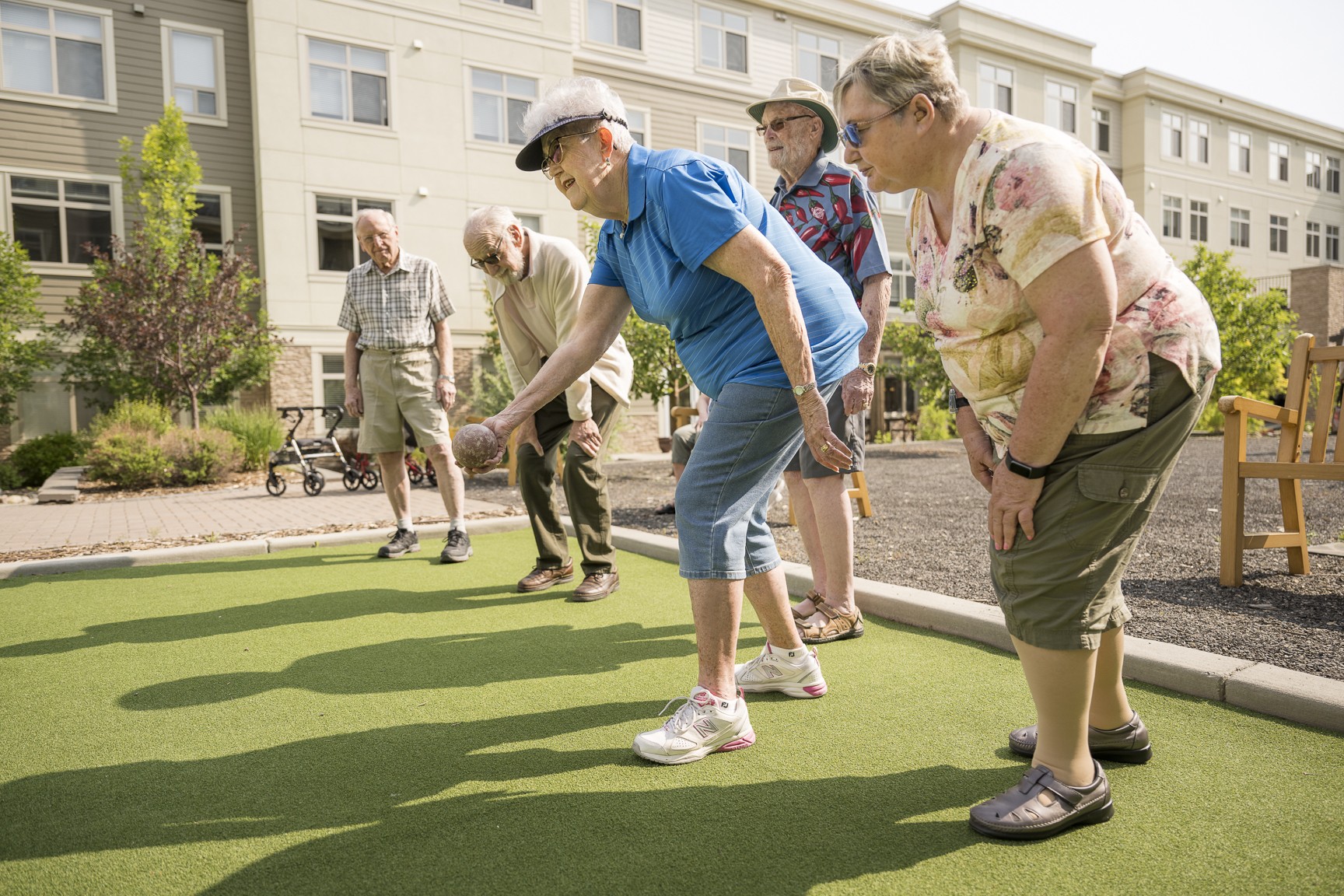
Residents living independently often participate in outdoor walks, self-directed exercise and recreational games. Those in assisted living take part in guided programs that can be adapted to their mobility.
“Seated or standing options ensure that everyone can participate.” Activities frequently overlap across both groups, allowing residents to remain socially connected while staying active.
Programs such as Tai Chi, Drum Fit and interactive activities consistently draw strong participation.
“These activities promote movement, social connection and a sense of accomplishment.”
The design of the residence also helps encourage activity. Programming takes place in multiple locations throughout the building, prompting residents to move between spaces for classes, social gatherings or events.
Residents also participate in walking challenges using designated loops within the residence.
“What might initially seem like a limitation has become an opportunity to thoughtfully integrate movement into everyday life,” Paul adds.
One initiative illustrates how small changes can make a difference. Riverwalk’s walking club began during the Winter Olympics as a simple steps challenge.
“What began with two participants has grown to double-digit involvement,” Paul explains. “Friendly competition and peer encouragement have built camaraderie and pride.”
Participation in the walking club has also encouraged residents to join other exercise classes, demonstrating how early engagement can lead to broader lifestyle changes.
Designing communities that encourage activity
At United Active Living, movement is viewed as fundamental to maintaining independence and quality of life.
“In practice, movement does not differ significantly between residents in retirement and those in assisted living,” explains Kera Redlack, vice president of wellness and experience.
Across United communities, the focus is on helping residents maintain, and where possible improve, physical function regardless of mobility level.
“Regular movement is essential for physical health, confidence and quality of life,” Redlack says. “After all, if they don’t use it, they’ll lose it.”
Fitness programming is intentionally designed to be inclusive and adaptable. Registered kinesiologists help ensure activities can be tailored to residents’ abilities.
“At United communities, classes are conveniently located within the building,” says Tracy Roberts, a registered kinesiologist. “Our fitness program offers inclusive options for all mobility levels, including seated classes, sit-to-stand classes, standing classes, as well as specialized balance and yoga classes.”
Movement extends beyond traditional exercise. Creative programs in art studios encourage dexterity and strength through painting, clay work and textile projects.
Social activities also play a role. Residents dance at monthly welcome events and take part in weekly line dancing sessions known as The Missteps.
“Opportunities to connect with others, laugh and enjoy the experience reduce anxiety around movement and build confidence,” Redlack explains.
Group fitness classes consistently attract strong participation.
“The seated classes typically have a high participation rate,” says Darian Ymbang, a registered kinesiologist with United Active Living. “They allow residents with varying fitness levels to attend while also providing an opportunity to connect socially.”
The benefits are visible not only in participation rates but also in residents’ wellbeing.
“Residents frequently express feeling better after a session in the fitness studio,” Ymbang says. “They feel stretched out, stronger and often more positive about their day.”
Roberts has observed that consistent participation can lead to meaningful improvements in mobility.
“In some cases, residents who initially used wheelchairs have progressed to walkers, canes and even independent walking through regular participation in our programs.”
Balancing activity with safety
Encouraging physical activity among older adults must also address safety concerns, particularly the risk of falls.
Exercise, however, is often part of the solution.
“Multicomponent exercise where you combine aerobic, muscle strengthening and balance activities can help prevent falls,” Hogan explains.
Senior living communities carefully integrate safety considerations into mobility programs.
At The Brenda Strafford Foundation, Vice President of Continuing Care and Operational Excellence Carolyne Mondoux explains that movement is incorporated into everyday routines through individualized care plans.
“Daily movement and staying active is part of everyday life across our communities, regardless of funding model,” Mondoux says.
Residents may participate in structured exercise programs or integrate mobility into everyday activities such as personal care and mealtimes.
“Our goal remains the same: to support independence, dignity and quality of life through meaningful, daily movement.”
Care teams collaborate across disciplines, including nursing staff, physiotherapists, occupational therapists and therapeutic recreation specialists.
“Movement, safety and risk management go hand in hand,” Mondoux explains. “Reduced mobility actually increases fall risk over time, so supporting safe and appropriate activity is part of prevention.”
Addressing barriers in continuing care
Despite growing recognition of exercise as a key component of healthy aging, implementing movement programs in continuing care settings can present challenges.
“Limited resources, including staffing, funding and time, are the most significant barriers to physical activity,” Mondoux says.
When care teams are stretched thin, essential clinical needs must take priority.
The Brenda Strafford Foundation is exploring ways to address these challenges through its Dr. Barrie Strafford Centre for Learning, Innovation and Quality (CLIQ).
One initiative currently being piloted involves the BISEP Ambulation Re-training Mobility Mechanism device, which may allow residents to walk safely with reduced staff assistance.
“This trial explores whether the device can help reduce assistance when walking and transferring while still providing the safety and support the resident requires,” Mondoux explains.
A shift toward active aging
As Calgary’s senior population continues to grow, the emphasis on active aging is increasing.
Senior living communities are investing in evidence-based exercise programming, accessible design and professional expertise to help residents remain mobile and independent.
“Movement and social engagement are not optional amenities,” Redlack says. “They are foundational to health, independence and quality of life.”
From walking clubs and seated fitness classes to strength training and dance, movement is increasingly recognized as a powerful tool for supporting longevity and wellbeing.
Whether it is a daily walk, a resistance exercise class or a dance with friends, staying active remains one of the most effective ways to support healthy aging.