


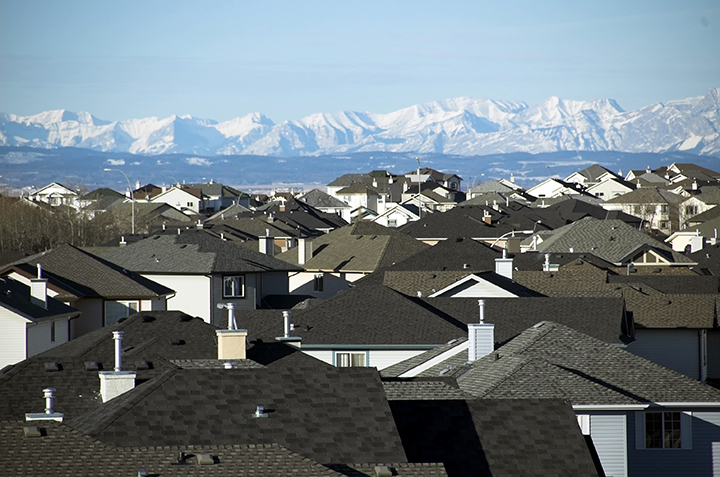
This year, Calgary real estate has become a bit of an anomaly.
Same market, but detached, single-family homes vs. condos and new, multi-residential development continues to define Calgary as almost two separate real estate markets moving in opposite directions.
One is steady. One is struggling.
Detached, single-family homes continue with strong balanced market competition, sparking multiple offers, tight timelines and strong demand. Calgary’s condo, multi-family and row style home market is sluggish at best with longer selling times, more room for negotiation and, some Realtors suggest, a worrisome slump.
National housing numbers show that Calgary leads Canada in housing starts, driven by a massive influx of purpose-built apartments. Developers have quickly built new inner-city high-rises and suburban multi-family units, and converted old downtown office spaces into residential living.
Susanita de Diego, board chair at the Calgary Real Estate Board (CREB), explains that Calgary real estate’s current tale of two markets depends on the home type and location. “Calgarians tend to prefer detached homes. If those are out of reach, the next best thing is a semi-detached home followed by a row home and then an apartment.
“With Calgary’s population growth slowing in the last year, the market has gone from not enough detached homes being built to more balance in that market.
“At the same time, there were perhaps too many apartment-style homes built, both as rental units and for sale. It is why we have seen price decreases in some parts of Calgary.”
Inventory – for new builds and re-sales – is always a key driver of the Calgary market. And the shift in inventory, in the past couple of years has significantly impacted the market.
“Just two to three years ago, Calgary badly lacked housing inventory,” explains the Calgary savvy Christian Twomey, manager at REMAX Landan Real Estate. “However, a surge in new home construction and a slowdown in in-migration have increased supply, shifting Calgary’s overall real estate market from a seller’s market to more balanced conditions.
Now, inventory has also become an important aspect of Calgary’s condo and multi-family markets. “The apartment sector is experiencing an inventory surge that far exceeds other segments, creating conditions that have firmly shifted leverage to favour buyers,” he notes.
Listings for apartment-style condos face stiffer competition and longer days on the market. The numbers show that the Calgary condo and townhome market is a buyer’s market – characterized by rising supply, falling benchmark prices and more negotiating power for buyers.
While CREB, Calgary area Realtors and other experts cite professional market factors and trends, there is an informal consensus about a current Calgary condo slump.
According to Anne-Marie Lurie, CREB chief economist, the spate of new construction and development in Calgary has caused lower prices for apartments and condos. “There is a lot of rental construction happening across the city. A lot of new developments. This spring, the number of condos for sale was just short of the record high set during the financial crisis of 2008.”
CREB stats show that Calgary’s condo market is experiencing a significant slump, driven by a flood of new supply, slowing sales and declining prices. The 2026 apartment benchmark sits at roughly $300,000, which translates into a nine per cent year-over-year drop.
No doubt about it. Condo inventory is up, condo prices are down and, with over five months of supply, Calgary condos are a buyer’s market.
Because “rentals” are a separate but a related segment of Calgary’s overall multi-family and condo real estate market, the trends are relevant.
In the past year, Calgary’s rental market has shifted from a 2024-2025 severe shortage to 2026’s renter-market slump. Average Calgary rents have drooped from about five to nine per cent year-over-year, with going rents are about $1,500 to $1,780 for a one-bedroom. Calgary’s vacancy rate has spiked nearly six per cent, as new inventory continues to come on market.
“The ‘inventory’ of multi-family, towns and condos has dramatically increased,” explains Jared Chamberlain, associate broker and co-owner of Calgary’s Chamberlain Group. “Lots of the market inventory increase was purpose-built rentals and not resale. Much of it has to do the federal governments push for ‘density’ in our market and more rentals.
“Many of the 4- to 8-plexes inner city were passed through the city and the rezoning, which were mandated from the federal government.”
Because supply and demand for newbuilds, multi-family, condos and rentals are critical for the Calgary real estate market, Calgary migration trends are a key factor. The city is seeing slower population growth and a sharp decline in international migration compared to the highs of 2023-2024.
“Calgary’s real estate market will likely be flat for the next couple of years,” Chamberlain says, “notwithstanding any outside forces like the foreign buyer ban being lifted, referendum votes, interest rate changes and more. It’s hard to predict because they are not normal market factors.”
Christian Twomey acknowledges the Calgary’s current condo and multi-family glut but adds with positivity that, “because Alberta continues to lead Canada in job growth and economic diversification, fundamental housing demand will remain robust through 2026 and 2027, preventing widespread oversupply.”