


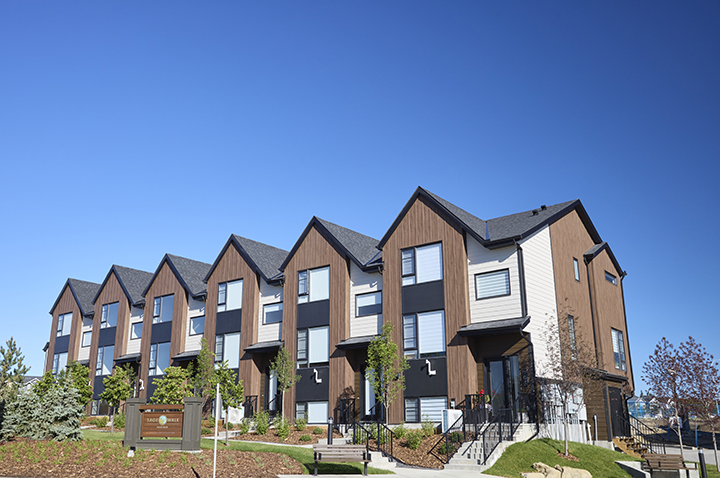
The experts, the numbers crunchers, the stats and the trends agree!
“There have been significant shifts in both the Calgary condo and rental markets over the past year,” explains Taylor Pardy, CMHC lead economist, Prairies. “Some key factors are cumulatively contributing to softer Calgary market conditions.”
Although there is continuing Calgary demand for lowered rates in multi-family rentals, there is significant slump in new and re-sale Calgary condos.
“Looking at Calgary’s condominium market from 2022 to today shows that the market has gone through a remarkable cycle,” notes Julie Dempsey, downtown certified condo specialist with Royal LePage Benchmark. “The influx of interprovincial migration was a significant driver of the housing market. Alberta’s affordability, combined with the success of the Alberta is Calling campaign, attracted buyers looking for lower housing costs and stronger investment opportunities.
“But, as with every new year, market direction can change quickly. Today’s market looks very different than it did at its peak.”
While developers are still relatively bullish about the construction of new condos and multi-family projects, markets trends are unmistakable. Calgary rents are coming down, and Calgary condo sales are struggling. Realtors inevitably cite comparisons to Calgary condo and multi-family boom years (2022 and 2023) with specific reasons for Calgary’s current rental and condo situations.
“In June 2026, there were 2,076 active apartment condominium listings, compared with 1,221 in June 2024. An increase of approximately 70 per cent,” says Susanita de Diego, chair, CREB® Board of Directors and owner/broker of Coldwell Banker Mountain Central. “During the same period, sales declined from 791 to 423, a decrease of approximately 47 per cent. The benchmark price decreased from $344,700 in June 2024 to $299,000 in June 2026, representing a decline of approximately 13 per cent.”
The CREB numbers also track that condo sales have plunged 20 per cent and inventory soared 24 per cent higher than long-term norms.
Rent or buy is an ongoing Canadian real estate decision. Currently, the clear trend indicates people opting to rent vs. buying condos, driven by high borrowing costs, high monthly maintenance fees and a large inventory of unsold condo units. In Calgary, as in most major Canadian real estate markets, a clear trend shows people opting to rent rather than buy a condo, due to economic factors like high carrying costs, since elevated mortgage rates and steep condo fees make monthly ownership significantly more expensive than equivalent monthly rent in many major urban centres.
Also stalled appreciation, with slumping demand and a large supply of condos have caused condo price growth to flatline or decline, removing the short-term capital gain incentive for buyers.
Rental trends also underscore a changing Calgary market. Rents are cooling and Calgary has some of the steepest annual rent drops among major Canadian markets. Average rents have fallen four to five per cent, year-over-year, bringing overall Calgary rent averages to around $1,450 to $1,600 a month for one-bedroom units.
Various factors get the blame for Calgary’s condo slump.
A glut! By early 2025, more than 18,000 multi-family and condo units had broken ground, flooding the market, causing active listings to approach record highs. Benchmark prices and sales began to droop as Calgary’s tsunami of new multi-family completions flooded the market and slowed buyer demand.
According to upbeat Reilly LePage, director of sales and marketing at Logel Homes, “The condo market has shifted from a strong seller’s market to a more balanced position, trending towards a buyer’s market in some Calgary quadrants. Affordability remains a key condo driver, and also that condos offer lower entry costs and less maintenance.”
He adds that many buyers are taking more time to decide, and investor demand has dropped off significantly, softening overall activity. “Developments with A+ locations, quality construction and attractively priced homes still sell quickly. Four years ago, demand was outpacing supply and prices were rising quickly. Today, with increased inventory and slower sales, buyers have more choice and negotiating power.”
CREB stats point out that the suburbs are heavy competition. The availability of developable land on Calgary’s outskirts means buyers can often get newer, larger row homes or detached builds at comparable price points, hurting inner-city condo values.
“But no doubt about it,” LePage says with enthusiasm. “Well-located, quality product still moves, like Logel’s Meridian Seton, Sage Walk Ravines, Mahogany and Livingston Central.”
In addition to the real estate constant of affordability, migration is a key factor, particularly as it impacts the condo slump.
“Net migration to Alberta in the first quarter of 2026 declined significantly compared with the same period last year,” de Diego points out. “At the same time, Calgary experienced record apartment construction over the past several years.”
She explains that weaker migration has reduced the pace at which new housing supply is being absorbed. Moderating demand and increased supply have contributed to buyer’s market conditions for apartment condos.
Pardy cites CMHC research which highlights, “Slower population growth directly affects demand for rental housing at a time when a historically significant amount of purpose-built rental units is under construction and coming to market. At the same time, condo investors who were looking to either rent their units out in the secondary rental market or sell their unit to an owner occupier upon completion, have been impacted by the same slowdown in population growth.”
Because the Calgary condo slump is a continuing market concern, there has been occasional buzz about the possibility of an Ottawa “condo bailout,” like this year’s federal partnership with B.C. to convert more than 2,200 unsold Vancouver condos into affordable, rent-to-own housing.
The plan is still contentious. Critics argue against a taxpayer-funded bailout for developers who made poor investments. The government maintains that the deal as an efficient opportunity to buy on ‘liquidation’ to create affordable housing.
Regardless, there has been no suggestion (from Ottawa or Alberta) about any similar condo bailout possibility for Calgary. Besides, stats underscore that Calgary’s condo slump is not nearly as dire as Vancouver’s.
For the Calgary condo and rental market moving forward, “We expect vacancy rates in Calgary to continue to increase through 2027, as new supply continues to hit the market faster than demand can absorb it,” CMHC’s Taylor Pardy says, “with vacancy rates hitting 6.2 per cent at the peak.
“In 2028, we expect market conditions to start normalizing as population growth picks up resulting in an apartment vacancy rate of 5.8 per cent.”
From Julie Dempsey’s Calgary condo expertise, “Looking ahead to the balance of the year, I don’t see price appreciation in the condominium market. While there are encouraging signs that prices may be stabilizing, the market favours the buyer and they continue to have choices. For sellers, the fundamentals haven’t changed: success comes down to price and presentation. If a condominium isn’t attracting offers, it’s almost always because the property isn’t positioned competitively on price, presentation or both.”
CREB’s Susanita de Diego expects demand to remain relatively stable through the balance of 2026, supported by stable employment and interest rates. “Apartment housing starts are expected to moderate, but it will take time for the current supply to be absorbed, particularly given lower migration levels. As inventory normalizes and demand improves, market conditions are expected to become more balanced.”