


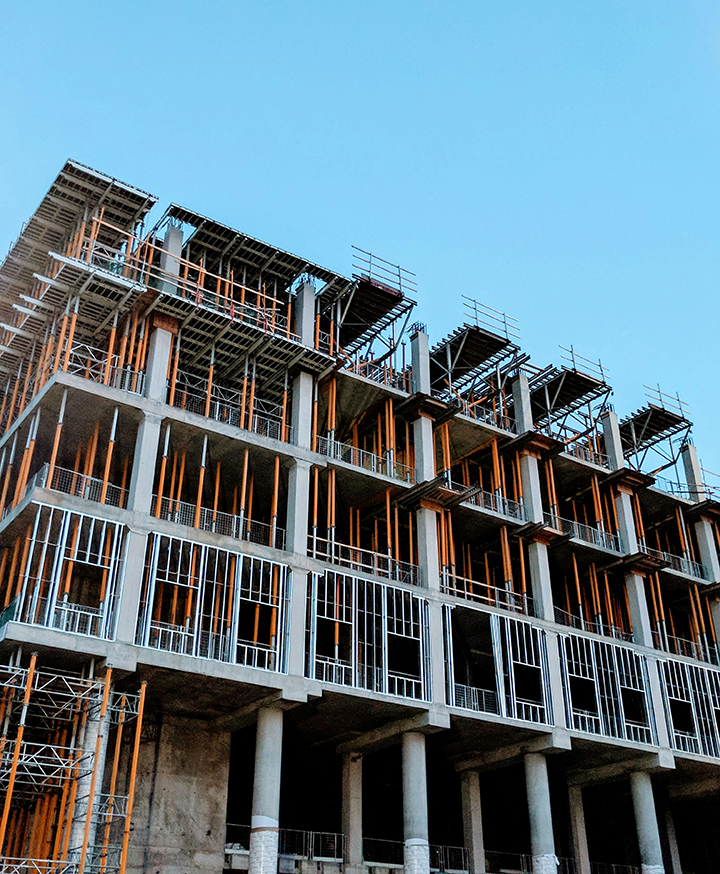
The trend is unmistakable. The densification of Calgary is happening! And it is very much part of the plan – not only developer plans but the City’s plan.
As formally detailed in the Calgary Plan (the update to the current Municipal Development Plan) the city is densifying, undergoing a massive shift toward higher-density development.
The strategy focus is to control suburban sprawl, by aggressively densifying particularly the inner-city and transit corridors. Recent densifying stats show that, driven by city-led zoning and revitalization strategies, 70 per cent of Calgary housing starts are now multi-family units and townhomes.
While urban planners and development professionals underscore that Calgary construction is undergoing a massive shift toward densification, they try to avoid the shoptalk that the city is transitioning from sprawling suburbs to “missing middle” housing like townhomes, multiplexes and downtown conversions.
In contemporary Calgary, citywide zoning reforms, shifting demographics, migration and supply and demand, and financial incentives are fueling Calgary’s densification boom.
According to Tim Logel, president and CEO of Logel Homes, Calgary’s award winning and premier multi-family homebuilder, “Densification delivers more affordable new housing, more choice and more efficient use of land. That’s why it’s central to the City’s growth pan. Higher density also makes better use of existing and new infrastructure, such as roads and city services, which keeps costs down across the board.
“Densification often means multi-family condos and townhomes, which are an affordable product type, something that Calgarians and Canadians alike are vocal about wanting.”
Logel emphasizes that while densification is a plus for Calgary housing, it is also efficient construction for developers.
“A vital aspect is the efficient use of land. Construction efficiencies in multi-family allow us to deliver homes at lower price points than single-family. That is very important, because affordability makes homeownership more challenging. The challenge shows up when too many investor or rental products are built in one area, and that segment oversupplies.”
Susanita de Diego, board chair at CREB®, underscores that residential densifying is a Calgary positive and points out that, “Multi-family and other ways builders and developers are densifying Calgary is happening differently in neighbourhoods, from the inner city to the outer suburbs.
“New secondary suites and replacing detached homes with row homes and apartments are creating more places for Calgarians to live in existing communities, while new communities are required to have higher density levels than in the past so they have a greater mix of row, apartment and detached homes on smaller lots.”
BILD Calgary Region CEO Brian Hahn suggests that, for Calgary area builders and developers, densification is a Calgary market evolution. “Densification is being primarily driven by affordability and demand. The most attainable new housing being built in Calgary right now is the denser product: row homes, secondary suites, townhomes and purpose-built rental. Our members are building these because they hit a price point that works for buyers and renters who cannot yet stretch to a detached home.
“Policy played a real role,” he adds, “and it worked. Federal incentives like the enhanced GST rebate on new purpose-built rental housing from 36 per cent to 100 per cent, and the Canada Mortgage and Housing Corporation (CMHC) MLI Select program have made it easier and more viable to build these types of projects.”
Because, as in other real estate sectors, supply and demand are critical drivers of market shifts and ups and downs, migration, prices and affordability are also important. For comparison, and to track the densification boom, developers and residential construction analysts use pre- and post-COVID numbers as a scale.
Colliers Calgary senior vice president Eric Horvath points out that, “Since COVID, Calgary has experienced a definite boom in new multi-residential development, primarily driven by purpose-built rental projects.”
Pre-COVID (2016-2020) there was a yearly average of 1,737 purpose-build apartments, 3,342 condos and 13 office-to-residential units completed. Post-COVID (2021-2025), it was 5,853 purpose-built apartments, 3023 condos and 176 office-to-residential.
He crunches the numbers and emphasizes the role of migration and Calgary’s population increase as vital drivers of Calgary housing supply and demand. “Pre-COVID (2016-2020) there was a population increase average of 5,640 per year and a total Calgary population increase of 28,200. Post-COVID (2021-2025) there was an increase average of 42,500 per year with a total population increase of 212,500.”
Respected Tim Logel acknowledges the critical role of migration and population growth, and adds that the current slump is not unique to Calgary.
“Migration absolutely affects housing demand, but the record in-migration of the last few years didn’t just disappear. Those people are still here, and many are on the path to becoming homeowners. That’s a multi-year tailwind for housing, including our segment. Besides, the migration slowdown is a national story, not an Alberta one.
“As of April 2026, Alberta was the only large province still growing, while the populations of B.C., Ontario and Quebec each fell in that same time period, with Alberta still leading the country in interprovincial migration.”
Logel underscores the critical impact of Calgary’s population growth. From 2022 to 2024, record immigration to Calgary pushed demand to a peak against low supply. Land costs rose and the cost to build increased about 45 per cent. Supply caught up around March 2024, and the market moved into balance at three to four months of inventory.
“Although immigration has cooled nationally, Calgary is still gaining people, largely from other provinces. And those are working-age households who buy homes.”
The densification of Calgary is very focused on consumer trends and, like as with traditional detached homes, location-location.
“Our A-locations stay in demand, where condos and townhomes sit next to grocery stores, retail and easy access to roadways. Walkable communities – like Seton, Sage Hill, Livingston, Mahogany and our development in Canmore – are much in-demand. They are communities, places where we have intentionally built next to retail and amenities. We focus on buyers who intend to live in the home rather than investors.”
Despite the Calgary Plan and densification, affordability, a migration slump, Calgary developers and Realtors wonder how long the boom can last, and mention a possible multi-family, condo and purpose-built rental glut.
“The Calgary market is currently undergoing a period of rebalancing as it digests the significant new multi-residential supply, alongside cooling net in-migration levels,” Horvath says. “This can be demonstrated by the uptick in average vacancy and the resulting downward pressure on rental rates, which began in early 2025.”
According to BILD Calgary’s Brian Hahn, “Several factors impact the overall housing supply-demand equation of specific housing market segments. Calgary’s population growth has strong ties to its housing affordability advantage relative to other major Canadian markets. And Calgary rents still sit well below Vancouver and Toronto.”
As Calgary densification continues, with robust residential construction, there may be some speedbumps and slow downs but stability in multi-family construction.
Colliers’ Eric Horvath guesstimates, “Calgary is in about the fifth inning of this cycle. Perhaps fewer new multi-residential developments going forward, with a number of proposed or planned projects likely to be placed on hold for the time being. When the market regains strength, and it will, rental prices will adjust and net in-migration returns to stable and sustainable levels.
“We expect continued softness in the new condominium development market as demographics, not exclusive to Calgary, trend toward renting versus owning. A definite positive is that Calgary continues to offer the strongest economic fundamentals within Canada and also offers attractive housing affordability relative to other major Canadian markets.”